
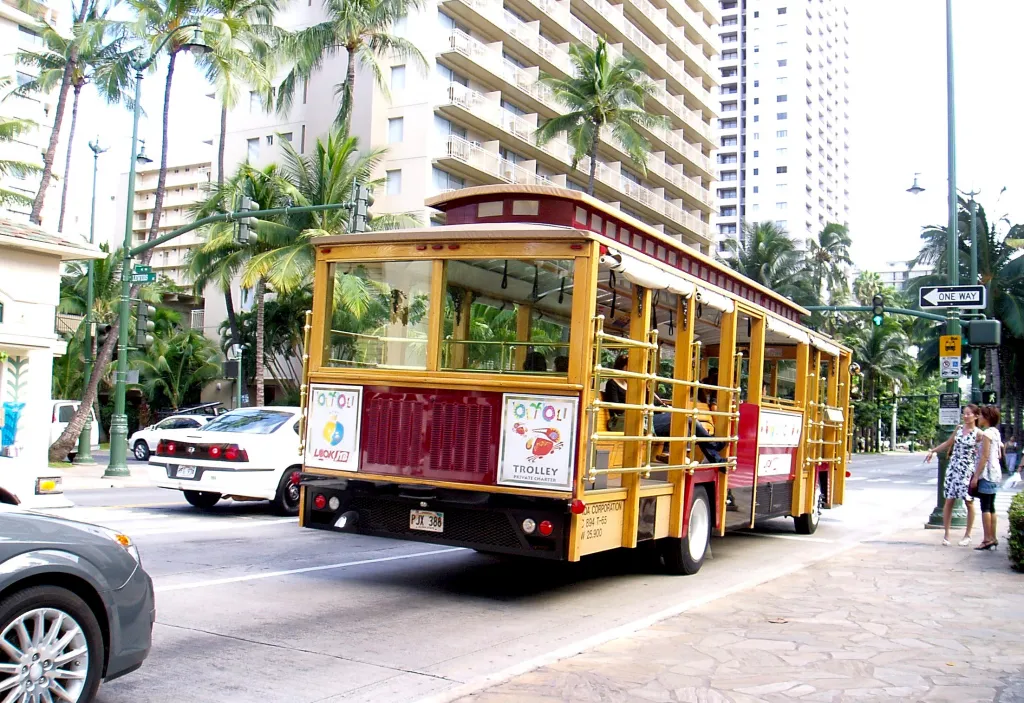
You hop on the Waikiki Trolley Blue Line and let Kalanianaole Highway do the work. About 40 minutes later you step off at Halona Blowhole Lookout and hear the ocean thump below the rails. Salt spray hangs in the wind and the rocks shine like wet lava glass. You’ve got roughly 15 minutes, so you scan for Halona Cove and Koko Crater and pick your angle fast. But where should you stand first?
Key Takeaways
- Take the Waikiki Trolley Blue Line (Coastal Route); Halona Blowhole Lookout is a featured stop between Kahala Mall and Sea Life Park.
- Confirm the exact stop name/number on the live trolley map and the posted lookout stop sign, since numbering can change.
- Blue Line trolleys arrive about every 40 minutes; the scheduled Halona stop is roughly 15 minutes, so return before departure.
- Best viewing is mid–high tide with strong south/southeast swells; winter (Nov–Apr) is wildest and may bring humpback whale sightings offshore.
- For photos, use a fast shutter for spray up to ~50 feet, wipe salt mist often, and frame from the west edge for cliffs and horizon islands.
Which Waikiki Trolley Line Stops at Halona Blowhole?
Hop on the Waikiki Trolley Blue Line (Coastal Route) and you’ll roll straight to the Halona Blowhole Lookout, one of its featured stops. On this Blue Line ride, you circle Oahu’s southeast coast and get a built-in pause for salty air and spray. Trolleys arrive about every 40 minutes, so you can hop off without overthinking the clock. The stop is planned for roughly 15 minutes, just enough time for panoramic ocean views, quick photos, and that whoosh when the blowhole fires. From November through April you might spot whales offshore. You can ride on a 1-Day Blue Line pass or use a multi-line pass. It usually shows up between Kahala Mall and Sea Life Park or Koko Marina on the day’s loop. For a full Southeast Oahu day trip, the Blue Line makes it easy to plan a scenic day along the coast with multiple photo-worthy stops. Perfect
Where Is the Halona Blowhole Stop (and Stop Number)?
You’ll find the Halona Blowhole Stop on the Waikiki Trolley Blue Line coastal loop, set between Kahala Mall and Sea Life Park, and it’s usually a quick 15-minute lookout break with salty wind and crashing spray nearby. Step off at the marked Halona Blowhole lookout stop on the Blue Line map, then wander to Halona Cove, spot the Koko Crater Arch Trail viewpoints, and keep your camera ready. This stop is part of the Blue Line itinerary that pairs coastal views with local eats along the loop. For the exact stop number, check the live trolley map or the latest schedule, or just ask the driver, because the numbering can shift like sand.
Blue Line Stop Details
If you’re riding the Waikiki Trolley Blue Line (Coastal Route), the Halona Blowhole stop shows up on the schedule as “Halona Blowhole” or “Halona Blowhole Lookout” along Kalanianaole Highway near Halona Cove. The trolley usually parks for about 15 minutes, just enough to hear the boom, feel the salt mist, and snap a few coastal shots. Service runs about every 40 minutes, so you can plan your timing without sprinting like you’re chasing a surf report. If you’re building in a swim break, this stop works well with other Perfect Beach Stops on the Blue Line for quick dips between sightseeing.
- Bring your camera and wipe lenses after spray.
- Use your Blue Pass to hop off and reboard later the same day.
- Pair this lookout with nearby Sea Life Park or Koko Marina on the route.
You’ll stand above dark lava rock as waves rattle below and cars hum.
Exact Stop Number
Scan the Blue Line map before you roll out, because the Halona Blowhole stop number can change depending on the map edition or the sign posted that day. Halona Blowhole Lookout is on the Blue Line, yet numbers shift. Confirm today’s number on the live trolley map or at the Waikiki Shopping Plaza booth. Trolleys arrive about every 40 minutes all day, and you’ll usually get a 15 minute lookout break. An All Lines pass or one day Blue Line pass works. For another scenic ride option, the Waikiki Trolley Green Line features the Diamond Head Express for quick access to the crater area.
| What you need | Where to confirm | Why it helps |
|---|---|---|
| Current stop number | Live trolley map | Matches today’s listing |
| Posted stop sign | At the stop | Avoids wrong lineup |
| Valid ticket type | Blue Line or All Lines pass | Keeps hop on hop off easy |
Map And Landmarks
Because the Blue Line hugs Oʻahu’s southeast coast, the Halona Blowhole stop feels easy to spot once you know the landmarks. You’ll ride Kalanianaole Highway and pull into Halona Blowhole Lookout, a paved turnout where trade winds hiss and salt mist hits your face. From the rail, you can see the blowhole, Halona Cove’s curved sand, and on clear days Moloka‘i and Lana‘i floating on the horizon. The Waikiki Trolley Blue Line is known for its scenic views along this coastal stretch.
- On the live trolley map, look for the designated lookout stop between Kahala Mall and Sea Life Park.
- On site, follow the lookout signs and the low stone walls facing the ocean.
- Confirm the stop number on posted signage or at Waikiki Shopping Plaza’s LeaLea Lounge.
Trolleys come about every 40 minutes, so relax.
How Often Does the Waikiki Trolley Run to Halona Blowhole?
Usually, you won’t wait long to catch the Waikiki Trolley to Halona Blowhole since the Blue Line Coastal Route rolls by about every 40 minutes and makes a scheduled stop at the Halona Blowhole Lookout. If you’re pairing coastal sightseeing with a Diamond Head morning, the trolley timing can help you plan an easy start.
With a trolley every 40 minutes, you can build the ride into your day and feel flexible. The Blue Line usually pauses around 15 minutes, so move fast and you’ll make it back without the “all aboard” panic. If you want a longer break, use a single line Blue pass or a 1 Day, 4 Day, or 7 Day multi line pass and re board on the next run. Traffic and rain can shift arrival times, so check the live trolley map or the schedule before you head out.
What Will You See at Halona Blowhole Lookout?
Step up to the railing at Halona Blowhole Lookout and the whole southeast edge of Oahu opens wide in front of you. The Pacific Ocean flashes cobalt and you can often spot Moloka‘i and Lana‘i on the horizon. Below, rugged volcanic cliffs drop to Halona Cove, a movie-ready pocket of sand and surf. Bring a lens cloth or hood for protecting your lens from windblown salt spray when the blowhole erupts.
Step to Halona Blowhole’s railing: Oahu’s southeast unfurls, cobalt Pacific, distant Moloka‘i and Lana‘i, cliffs plunging to Halona Cove.
Watch for three highlights:
- A seawater burst as swells shove water through an underwater lava tube and the blowhole shoots spray up to 50 feet.
- Wintertime humpback whales breaching offshore, if you’re lucky.
- Hang gliders lifting off nearby, drifting like kites with insurance.
You’ll roll in on the Waikiki Trolley Blue Line, hop out for a scheduled 15-minute stop, and enjoy it all free from the lookout area.
When Is the Best Time to Visit Halona Blowhole?
You’ll get the cleanest views and the best photos in early to mid-morning, when the wind stays calmer and the cliffs glow while the blowhole hisses and pops. You can time your stop for incoming tide and a solid winter swell, because bigger surf can fire a spray jet that shoots shockingly high and leaves salty mist on your camera. If you’re building a full sightseeing day, pair your visit with a trolley-friendly plan so you can hop between stops without worrying about parking. You’ll also want to think season, since November through April can bring humpback whale spouts offshore, and if you roll in before 10 a.m. you’ll beat the mid-day crowd and actually hear the ocean.
Morning Light And Spray
Often the best moment at Halona Blowhole shows up shortly after sunrise, when the light turns soft and the ocean still feels unhurried. You’ll get clean color on the rocks and less glare on your lens, plus crisp views toward Moloka‘i and Lāna‘i. Taking an early Waikiki Trolley helps you beat the heat and crowds for a calmer first look.
- Get there early with the Blue Line Waikiki Trolley in mind, since it comes about every 40 minutes and you’ll want the full 15-minute lookout stop.
- Watch for the first big bursts of spray. In winter, some jets can punch up near 50 feet and the mist tastes like pure salt.
- Linger a beat for bonus sightings. You might spot hang gliders stepping off the cliffs, and from November to April you can scan for humpback whales before the sun climbs.
Tide, Swell, And Wind
Morning light makes the rocks glow, but the real show at Halona depends on what the ocean’s doing. Aim for mid to high tide, when water packs into the lava tube and you’ll hear a thump, then the plume bursts up. Skip low tide and calm seas, when the Halona Blowhole can sit quiet like it’s on a coffee break.
If you’re timing your ride, note that the Honolulu forecast calls for southwest winds strengthening with gusts into Monday, which can push mist around at the lookout. Check swell and wind before you ride the Blue Line. A big south or southeast swell can turn the lookout into a salt-spray theater with louder booms and higher jets. Favor light offshore or cross-shore winds so the spray climbs for photos. Strong onshore gusts shove mist inland and blur your view. Visit in daylight, use the 15-minute stop, and stay off slick edges.
Seasonality And Whale Views
When winter rolls into Oʻahu, Halona Blowhole turns into a two-for-one lookout with louder ocean drama and a real shot at spotting humpback whales. From November through April, whales cruise past these cliffs to breed and calve, and you can often catch a breach between sprays. Aim for January to March if you want the best odds. This stop also earns its place among Waikiki Trolley best viewpoints for wide-open cliffside ocean panoramas.
- Bring binoculars, because the horizon likes to play hide-and-seek.
- Show up mid-morning to early afternoon for cleaner light and steadier seas.
- Stay back from edges when winter swells roar. The show gets wilder and so do the risks.
If you ride the Blue Line trolley, you get a scheduled 15-minute Halona Blowhole stop, so you can time your visit without renting a car today.
How to Stay Safe at Halona Blowhole (Waves & Cliffs)
Although the Halona Blowhole Lookout feels like a front-row seat to the ocean’s best show, you’ve got to treat the waves and cliffs with real respect. Stay behind the marked rails and in the viewing area. Surf can boom, and sneaker waves can surge, shooting spray up to 50 feet. Hear the hiss, and keep your feet planted. Never stand on wet or algae-slick rock.
Keep several meters back from cliff edges and watch kids closely. Secure hats and phones against gusts and sudden splashes. Check tide and surf forecasts, especially during winter swells from November to April on the coast of Oahu. Time your visit near Waikiki’s golden hour for calmer light and better visibility while you keep a safe distance from the edge. Don’t climb down to the shoreline or approach the blowhole opening. The rocks shift, and one slip can turn serious fast.
Best Photo Spots Near Halona Blowhole
Start at Halona Blowhole Lookout and claim the western edge of the paved viewing area so you can frame the blowhole with jagged cliffs and the Pacific crashing and hissing behind it. Come in golden hour for warm light and watch for Moloka‘i and Lānaʻi on the horizon, and if you visit November through April you might even catch humpback spouts beyond the spray. Then take the short walk down toward Halona Cove at low tide for closer beach angles with turquoise water and black volcanic rock, and keep your footing because the slick stones don’t care how nice your camera is. If you’re mapping your ride, note that the Waikiki Trolley also serves scenic stops like Kahala Lookout along the coast.
Halona Lookout Panoramas
As the road curves along O‘ahu’s southeast coast, Halona Blowhole Lookout opens into a wide, wind-salty balcony over the Pacific. You’ll see Moloka‘i and Lana‘i on clear mornings, and the platform glows at sunrise and again at sunset. Below, Halona Cove flashes turquoise while Koko Head roughs up the horizon. When the blowhole fires, spray can leap 50 feet, so set a fast shutter and reach for a zoom. Bring a light jacket. Gusts smell like salt and sunscreen, and they’ll test your balance. If you’re pairing this stop with the Waikiki Trolley, the Red Line is the one themed around Historic Honolulu highlights.
- Claim the left end from November to April for humpbacks and calves.
- Arrive early or between Blue Line trolley stops, about every 40 minutes.
- Steady your stance, wipe your lens, and let the surf do the talking.
Halona Cove Beach Angles
The lookout gives you the big, blustery show, but Halona Cove rewards you when you aim a little lower and pick your angle. Start in the Halona Blowhole Lookout parking area for the classic frame. You’ll shoot slightly above the crescent sand, rugged cliffs, and the blowhole plume. On clear days, Moloka‘i and Lana‘i sit on the horizon.
For texture, take the short steep path toward the cove’s northeast end. Step carefully since the rock gets slick. You can photograph turquoise water pooling on lava and tidepools popping. If you’re arriving via the Waikiki Trolley, plan a quick detour from the Koko Marina Center stop before continuing to the Halona Blowhole Lookout. For a wide sweep, pause midway on Koko Crater Arch Trail and include the cove and coastline. Go at golden hour, and in winter scan the Pacific Ocean for whales. Halona Cove Beach angles: shift, shoot.
How to Walk to Halona Cove From Halona Blowhole
From the Halona Blowhole Lookout, you can follow the cliff-edge path about 0.1 mile southwest toward the small sandy pocket of Halona Cove that’s usually visible below. In 5 to 10 minutes you’ll hear surf and spot the inlet between lava rock. You’ll pass salt-sprayed shrubs in wind.
From Halona Blowhole Lookout, follow the cliff-edge path 0.1 mile southwest to Halona Cove, passing windy, salt-sprayed shrubs.
If you’re arriving by the Waikiki Trolley Stop, double-check the posted route details before heading out.
- Wear sturdy shoes. The descent is steep and loose.
- Follow the ridgeline goat paths and stay left at forks.
- Move slowly on the final scramble to the sand, then return the same way.
Most people need 10 to 20 minutes round trip for the scramble section. At the bottom, watch for slippery rocks and strong currents. If waves look big, stay back. There aren’t lifeguards or bathrooms, so bring water and sun cover.
Koko Crater Arch Trail From the Halona Stop
Ready to swap that sandy scramble for a smoother stroll? From the Halona Blowhole stop, you can step onto the Koko Crater Arch Trail and let the tarmac do the work. It’s a mostly downhill, paved 2 miles that drops over 500 feet from the lighthouse trail toward the coast, so your knees get a break and your camera gets busy.
Plan about 1.5 hours with photo pauses. You’ll catch Pacific views plus Moloka‘i and Lana‘i and you might spot humpback whales from November to April. Wear sturdy shoes, bring water, and pack sun cover because shade doesn’t show up. If you’re riding the Waikiki Trolley, use a smooth stop sequence to prevent backtracking. If you rode a shuttle from Waikiki or Honolulu hotels, then grab a quick 15-minute ride back to the Halona area when you’re done.
Blue Line After Halona Blowhole: Best Next Stops
Hop back on the Blue Line after you’ve watched the spray kick up at Halona Blowhole, and the coast keeps rolling out like a postcard you can’t stop flipping. You’ve got about 15 minutes here, so keep your side quests short and listen for the trolley bell. Miss it and you’ll wait 40 minutes for the Blue Line run. Sea Life Park Hawaii is a key Waikiki Trolley Stop on this route, making it an easy add-on after Halona Blowhole.
- Sea Life Park: Ride east for a quick cool reset. You can catch marine exhibits, hear playful seals bark, and use the restrooms before hopping back on.
- Kalanianaole views: Stay seated as Koko Head and Koko Crater rise above the highway. The ocean flashes blue on one side.
- Koko Marina Center: Browse shops, grab lunch, then take a short walk for Leonard’s malasadas. Buzz optional.
Frequently Asked Questions
Is There an Admission Fee to Visit Halona Blowhole?
No fee. You can visit Halona Blowhole’s lookout for free since it’s a natural lava-tube feature with public access. You’ll only pay if you use a tour, trolley, or shuttle, and you should follow signs.
Are Restrooms or Water Fountains Available at the Halona Stop?
No, at the Halona stop, you’ll find no facilities: no restrooms and no water fountains. Bring bottled water, and use restrooms before you go or hop off earlier at Sea Life Park. You won’t have time.
Is Halona Blowhole Accessible for Wheelchairs or Strollers?
Mostly manageable, mainly mellow: you can roll a wheelchair or push a stroller along the paved lookout to railings. You’ll face Limited access on steep, uneven side paths and the trail down to Halona Cove.
Can You Swim or Snorkel Safely in Halona Cove Year-Round?
You can’t swim or snorkel safely in Halona Cove year-round. Seasonal caution matters: winter swells and rip currents spike risk, and even summer brings rocky entries and drop-offs. There aren’t lifeguards, so choose guarded beaches.
What Should I Pack for a Halona Blowhole Stop on the Trolley?
Pack like you’re arming a sea-sprayed compass: light windbreaker, sturdy closed-toe shoes, Sunblock essentials, hat and shades, water and snacks, plus a strapped phone/camera in a waterproof case, you’ll stay dry, steady, and ready for anything.
Conclusion
You hop off the Blue Line and the world flips from Waikiki’s smooth sidewalks to salt spray and black lava. You’ve got about 15 minutes, so you walk straight to the rail and listen for the blowhole’s low boom. Look left for Halona Cove’s quiet curve, then up to Koko Crater’s rough rim. Snap a quick shot in clean morning light. Check the stop sign, board on time, and keep rolling.
