
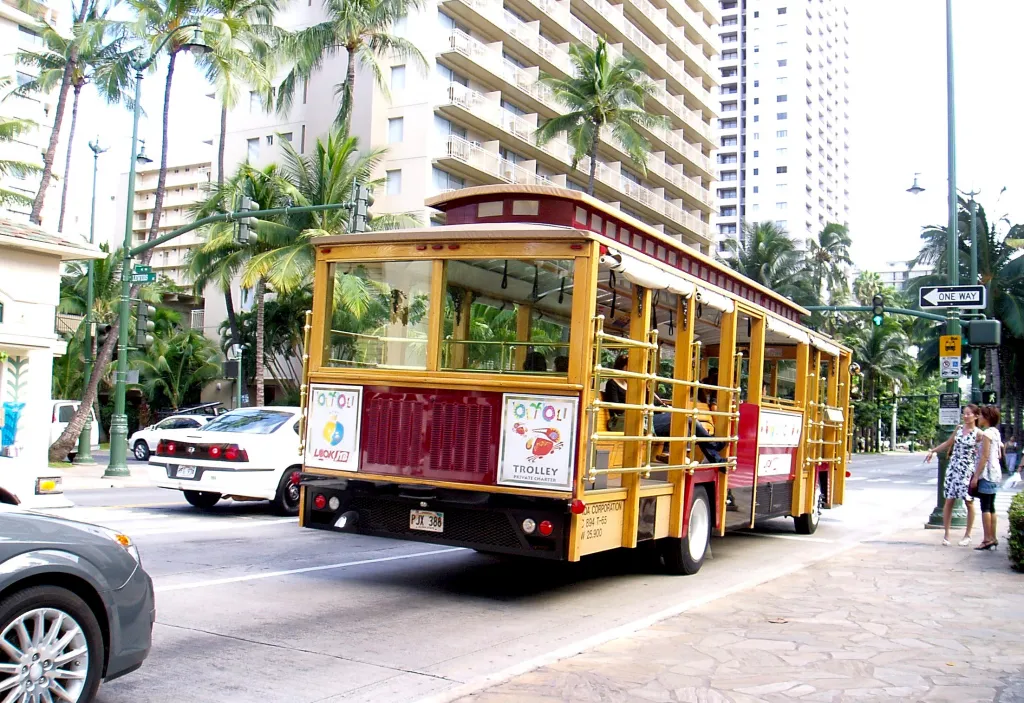
On a busy Waikiki morning, a stop can flip from accessible to not in minutes when a vehicle swap or street closure hits. You’ll want to confirm each stop right before you go by checking the booking link or waikikitrolley.com stop maps for the wheelchair symbol, peeking at the LeaLea Trolley Live Map, or calling 808-591-2561. Stop #1 at Royal Hawaiian Center is usually the smoothest rollout with extra staff. But which stops are friendly today?
Key Takeaways
- Check waikikitrolley.com stop maps (wheelchair symbols) or the booking link to confirm which stops are accessible today before traveling.
- Use the LeaLea Trolley Live Map for real-time stop locations, route changes, and traffic-related delays affecting accessibility right now.
- Not every run uses an accessible vehicle; confirm your specific line and bus has a lift/ramp before heading to any stop.
- Start at Stop #1 (Royal Hawaiian Center B-3F LeaLea/Tours lounge) for staff help, smoother boarding, and verified stop guidance.
- Call/text 808-591-2561 or email [email protected] to verify current accessible stops, detours, construction impacts, and pickup location changes.

Oahu Grand Circle Island Experience from Waikiki
Enjoy Grand Circle Island experience tour with breathtaking views of Amelia Earhart Lookout on Diamond Head, admire Chinaman’s Hat in front of Kualo...

Waikiki Turtle Snorkeling & 6-in-1 Adventure with Free Pickup
Experience a special turtle snorkeling adventure in Waikiki aboard a smooth and comfortable catamaran. This all-in-o...

Oahu Circle Island Snorkeling Tour: Dole, Pali Lookout & More
Looking for the BEST VALUE & MOST COMPLETE Circle Island Snorkeling Tour? Join us for the ultimate full-day, action-...

Waikiki Glass Bottom Boat Cruise
Experience the beauty of Oʻahu South Shore as we sail toward Lēʻahi (Diamond Head) aboard the spacious Haleiwa Qu...
How Do You Confirm Waikiki Trolley Accessibility Today?
Even if you rode the Waikiki Trolley last year, you’ll want to double-check accessibility today because routes and vehicles can swap like surf conditions. Start with your booking link or waikikitrolley.com and scan the map for stops marked with the wheelchair symbol. Then tap live updates like the LeaLea Trolley Live Map so you can hear the city’s traffic rhythm before you roll out. As a reality check, some “accessible” rides still require a working ramp and securement space, so set expectations around wheelchair ramps and tiedowns.
For answers, call or text customer service at 808-591-2561 or email [email protected]. When you pick up your Hop-On Hop-Off pass at the Royal Hawaiian Center B-3F lounge, ask staff what’s running on your loop. Before boarding, confirm with the driver or stop #1 team that boarding help and tiedowns are ready. Keep a ride in mind, just in case.
Which Waikiki Trolley Vehicles Take Wheelchairs?
If you’re picturing a classic Waikiki trolley with ocean air on your face, you’ll be glad to know several vehicles can take wheelchairs and scooters with the right setup. On the Blue Line, many open-air trolleys are wheelchair-accessible with a powered trolley lift that slides from a mid-body compartment, drops to floor level, then locks your chair into the center zone with Q’Straint retracting tiedowns. The Pink Line runs double-decker buses with a driver-deployed manual ramp, plus a folded-seat space mid-bus for a chair or scooter. For limited mobility travelers, choosing routes with minimal walking can make the ride and each stop far more manageable.
| Vehicle type | Boarding method |
|---|---|
| Blue/Red open-air | Powered lift + Q’Straint |
| Pink Line double-decker | Manual ramp + tiedowns |
Because not every run uses an accessible vehicle, confirm ahead at 808-591-2561 or [email protected] so you can roll aboard without surprises.
Why Is Waikiki Trolley Stop #1 Easiest to Board?
Once you’ve confirmed your trolley can take a wheelchair or scooter, the next win is picking the stop that makes boarding feel easy. At Stop #1, extra staff step in fast, so you’re not stuck watching the clock while a lift gets set. You’ll hear radio check ins and see hands pointing out the best line to roll. If you have hearing or vision needs, ask staff for accessibility tips so they can cue you with clearer gestures and positioning.
Drivers here know the accessibility gear cold. On Blue or Red, they deploy powered lifts and guide you to the middle parking spot with a clear aisle and fewer tight turns. On the Pink Line double decker, they fold seats, set the manual ramp with a gentle angle, and lock the bridge. Then they secure you with Q’Straint tiedowns and plan smoother later pick ups.
Waikiki Trolley Pink Line: Where Can You Board?
Where should you roll up to catch the Waikiki Trolley Pink Line without any guesswork? Start at the LeaLea Tours lounge inside Royal Hawaiian Center, B-3F, 2233 Kalakaua Ave B308. You can grab your confirmation, a mini-map, and hear the street hum before you board.
If you’re deciding between a single-line pass or a multi-line ticket, confirm what your fare covers before you line up. The Pink Line comes about every 15 minutes and loops in roughly 60 minutes, linking Ala Moana Center with Waikiki Shopping Plaza and other food stops that smell like garlic and sunscreen. Your double-decker bus has a manual ramp the driver sets down, plus a folded-seat wheelchair/scooter space with tiedowns. If you want extra coordination for later pick-ups, ask the staff at Stop #1. Then roll on and shop. Download the Pink Line info page so timing feels effortless.
Waikiki Trolley Blue Line: Accessible Stops & Lift Tips?
Roll up to the Waikiki Trolley Blue Line and you’ll trade shopping blocks for salty air and big views, without giving up accessibility. On the Blue Line, an open-air trolley hides a powered wheelchair lift in a middle compartment. The driver lowers it to floor level and rolls you aboard. Wheelchair parking is mid-car with Q’Straint automatic retracting tiedowns. Cars come every 40 minutes. Plan Diamond Head or Halona Blow Hole boarding to dodge long lift waits. If you want more help, begin at stop #1 and ask staff to line up later pick-ups. Sideways seats get breezy, but the tiedowns keep you steady. For a different vibe, the Green Line is known for a Diamond Head morning experience that pairs well with early starts.
| Stop | Feel | Tip |
|---|---|---|
| Diamond Head | Surf hush | Arrive early |
| Halona Blow Hole | Mist roar | Hold |
| Stop One | Curb | Confirm pickup |
Still comparing Diamond Head?
Ask for tour ideas, hotel suggestions, or a simple trip plan that combines both.
Trip Helper
Waikiki Trolley Red Line: Accessible Stops & Lift Tips?
On the Red Line, you’ll spot a powered wheelchair lift tucked into a hidden middle compartment, and it drops to floor level so you can roll on without a big production. Start at stop #1 if you can because extra staff usually help line up boarding and smooth out pick-ups, especially if your scooter needs a careful turn onto the lift. Before you board, do a quick safety talk with children so everyone knows to stay seated and keep hands clear during the lift and loading. Once you’re inside, you park in the middle and lock in with Q’Straint retracting tiedowns, then you can settle in for the open-air breeze and those sideways seats that make you feel like you’re cruising a moving porch.
Red Line Lift Locations
Spot the Red Line trolley as it clatters up to the curb, then head for the middle section where the powered wheelchair lift lives. This open-air trolley hides the lift in a side compartment near the center benches. When the driver pops it out, it drops to floor level like a neat little stage. Your Wheelchair parking spot sits right beside it in the middle bay, so you’re not weaving through tourists’ flip-flops. Q’Straint automatic retracting tiedowns click into place to secure a chair or scooter. If you ride a scooter, expect a tight turn into the middle ramp area, but the aisle gives you room to pivot. With service about every 60 minutes, check the map and time your arrival before it returns. For minimal walking, aim for stops where the curb is closest to the trolley door so you can roll straight on without navigating extra sidewalk distance.
Boarding At Stop One
If you want the smoothest start to a Red Line ride, begin at Stop #1 by the Royal Hawaiian Center near the LeaLea Tours lounge. You’ll hear the trolley bell and see staff ready to help. Ask the driver to meet you at Stop #1 when you book or when you roll up, and they’ll stage the lift on the Red or Blue open air trolley, or the Pink Line’s manual ramp. This is one of the best first stops to kick off your Waikiki Trolley day.
Your wheelchair/scooter may need a couple pivots because the turn onto the ramp feels snug, like threading a suitcase through a hotel lobby. The crew knows the angles and will clear the middle area. It’s the easiest spot to plan transfers and flag your return pick-up. Q’Straint support is on hand.
Securement And Space Tips
Rolling into the middle bay feels like slipping behind the scenes for a moment, because the Red Line’s powered lift lives in a mid‑trolley compartment and drops down to floor level with a steady whir. You roll on, then follow a short aisle to the mid‑vehicle space, where the driver guides you with quick hand signals and a calm voice. For senior comfort, take your time on the short aisle and ask the driver to pause if you need an extra moment to settle in.
Once you’re parked, you’ll use Q’Straint automatic retracting tiedowns for wheelchair securement. Keep your brakes set and your feet clear while the straps click and ratchet. Bigger scooters may need a tiny three point turn, so give yourself a minute. Boarding takes a few minutes, especially at busy stops. At Stop #1, extra staff can help and can line up your next pick up.
Waikiki Trolley Green Line: What’s Accessible, and How to Verify?
Hop on the Waikiki Trolley Green Line and you can glide from Waikiki to Diamond Head stops like the Honolulu Zoo, Waikiki Aquarium, and the KCC Farmers Market on Saturdays, with wheelchair-accessible boarding listed along the route. You’ll ride vehicles with ADA-compliant lifts and a mid-cabin space that locks in using Q’Straint automatic retracting tiedowns. The lift lives in a middle compartment, so you may hear it hum and unfold like a compact stage. If you’re rolling with a stroller, know that stroller tips can help you avoid common annoyances when boarding and parking it onboard.
Green Line trips come about every 60 minutes, with first pick-up around 7:23 AM, so build in cushion time for Wheelchair access and easy connections. To verify each stop before you roll out, check the official map and schedule plus live updates before travel, or call 808-591-2561 or email [email protected].
What Can Change a Waikiki Trolley Stop’s Accessibility?
While a Waikiki Trolley stop might look the same every day, the way you board can change fast once wheels hit the street. If they swap vehicles, your access shifts too. An open-air trolley might hide a powered lift, while the Pink Line double-decker relies on a manual ramp. Ask what’s arriving before you roll up to the curb.
Street life matters. Temporary road closures, construction cones, and detours can push pickup to a different corner with a steep lip or rough pavement. Staffing plays a role as well. At hubs, someone can spot you and set the ramp quick. In wind or rain, operators may pause lift use for safety. And equipment faults or worn tie-downs can sideline access until a replacement shows.
Before heading out, confirm any reroutes and service updates so you don’t arrive at a stop that’s been temporarily moved or altered.
Frequently Asked Questions
Can Wheelchair Users Bring a Companion or Caregiver Onboard Without Extra Fare?
Yes, you can bring a companion or caregiver, and you may not pay extra under fare exemptions, but confirm caregiver policies. You’ll get companion seating once secured; ask about companion liability. Call 808-591-2561.
Are Mobility Scooters Allowed, and What Size or Weight Limits Apply?
Like a key fitting a lock, your mobility scooter’s allowed onboard. You’ll confirm scooter dimensions since no published weight/size limits exist. Expect battery restrictions and folding requirements to follow policy, and use Q’Straint/manual securement methods.
Do Accessible Stops Have Shaded Waiting Areas or Nearby Accessible Restrooms?
You’ll find shade availability at many accessible stops, often via covered malls or small shelters, and restroom proximity at major hubs. Check seating surfaces and shelter maintenance on the latest map or call 808-591-2561 today.
How Early Should Wheelchair Users Arrive Before the Trolley’s Scheduled Pickup?
Like a time traveler, you should Arrive early: show up 10–15 minutes ahead, or 15–20 if you’ll need a lift/tiedowns. Add Buffer time (5–10 peak; 20–25 courtesy stops) for Boarding sequence and Priority loading always.
Are Service Animals Permitted on All Waikiki Trolley Routes and Stops?
Yes, you can bring a service animal on all Trolley routes and stops; pets aren’t allowed. You don’t need service animal documentation, but you must meet training requirements, follow public etiquette, and request crossing assistance.
Conclusion
You’d think a trolley stop is a fixed thing, yet accessibility can shift with a vehicle swap or a sudden road closure. So you confirm it anyway. Check the booking link, the stop maps on waikikitrolley.com for the wheelchair symbol, or the LeaLea Live Map before you roll out. If you want the smoothest board, aim for Stop #1 at Royal Hawaiian Center. Call 808-591-2561 when the day gets loud and unpredictable.

Oahu: Kualoa Ranch UTV Raptor Tour
Traveling with family and friends? You can enjoy the fantastic Multi-passenger UTV Raptor experience with your entire family or as a group with the ex...
