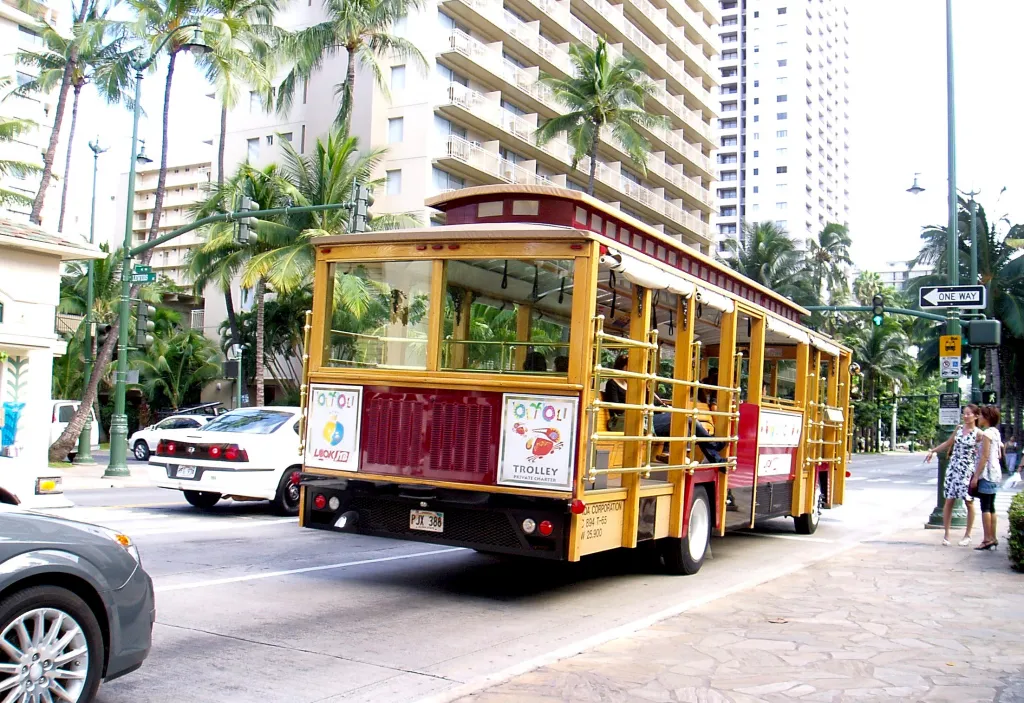
If you want history without the rental car drama, you can hop the Waikiki Trolley Red Line and watch Honolulu’s past roll by your window. You’ll step off at ʻIolani Palace where cool stone halls meet breezy lawns, then walk to Aliʻiōlani Hale and the gold King Kamehameha statue gleaming in the sun. Add Mission Houses, the Honolulu Museum of Art, and Punchbowl’s quiet views. But which stop hits hardest?
Key Takeaways
- Ride the Red Line “Historic Honolulu Highlights” loop for a 110‑minute narrated route linking monarchy history, WWII, and major landmarks.
- Stop at ʻIolani Palace, the only royal palace on U.S. soil, and plan about 60 minutes to tour grounds and exhibits.
- Visit Aliʻiōlani Hale and the King Kamehameha Statue for iconic Hawaiian governance architecture and unity symbolism, plus excellent photo angles.
- Explore Mission Houses Museum and nearby Kawaiahaʻo Church for early-kingdom history, original structures, and Hawaiian-language printing heritage.
- Allow about 60 minutes at Punchbowl (National Memorial Cemetery of the Pacific) for WWII-era context, Court of the Missing panels, and crater views.
Is the Waikiki Trolley Red Line Best?
Often, the Waikiki Trolley Red Line feels like the best pick when you want history and culture to lead the day, not shopping bags. You roll past palm shade and city noise, then hop off for Iolani Palace’s cool stone halls and the gleam of the King Kamehameha Statue nearby. Up at Punchbowl Crater, trade beach chatter for birds and quiet rows of headstones that pull you into deeper history. Back in town, the Honolulu Museum of Art gives you color, canvas, and a strong cultural mix under one roof. Onboard narration ties Hawaii’s monarchy years to WWII, so you’ll catch details you’d miss on foot. It’s also known as the Historic Honolulu Highlights route, which helps set expectations if you’re planning your stops around culture first. If you need a wheelchair, note Chinatown and SALT at Kaka‘ako aren’t accessible right now for the moment.
Red Line Schedule, Tickets, and Intervals
You’ll want the Red Line timetable basics first, since the loop takes about 110 minutes and trolleys come about every 60 minutes, which makes one-hour stops at museums and memorials feel nicely timed. Next, you can pick ticket types that fit your day, like a $35 adult pass or $23 child pass, and you can grab single-line or multi-line options online with instant mobile confirmation. The Red Line itinerary is designed to cover Historic Honolulu highlights in about half a day. As you plan your stop intervals, check real-time locations in the Waikiki Trolley app, download the Mini-Map, and note that Chinatown stop #9 and SALT at Kaka‘ako stop #12 aren’t wheelchair accessible right now.
Red Line Timetable Basics
When you want to trade Waikiki’s beach buzz for a deeper Honolulu story, the Waikiki Trolley Red Line makes it easy to roam. You’ll ride a historic loop that takes about 110 minutes round trip, so you can time quick photo hops or a long museum pause. Trolleys roll into each stop about every 60 minutes, which keeps plans simple if you miss one. Plan around realistic timelines since ride duration can shift a bit depending on traffic and how long you linger at stops. Check the app for updates, then grab a mini-map so you know when to hop off at Iolani Palace, the King Kamehameha Statue, or Punchbowl’s rows. Note that the Honolulu Museum of Art closes Monday and Tuesday. Most stops work for wheelchairs, but Chinatown (#9) and SALT at Kaka‘ako (#12) don’t right now. Bring water and listen for the bell.
Ticket Types And Passes
How do you pick the right Waikiki Trolley Red Line ticket without overthinking it? Start with your vibe. If you want one classic historic loop, a single Red Line pass covers a 110‑minute round trip and the Hop-On Hop-Off freedom to step off up to 60 minutes at Iolani Palace, the King Kamehameha Statue, or Punchbowl Crater. To avoid long waits, plan around trolley headways so you know the typical intervals between Red Line arrivals.
| Option | Best for |
|---|---|
| Single ride | Quick culture fix |
| Multi‑day bundle | Unhurried museum time |
| Buy Multi‑line Passes | Mixing lines |
Typical pricing runs about $35.00 adult and $23 child. Buy online, download the Mini‑Map, and keep an ear out for the driver’s local stories. Multi‑day options suit walkers who love courthouse stone and shady lawns. Note: stops #9 Chinatown and #12 SALT at Kaka‘ako aren’t wheelchair accessible right now.
Stop Intervals And Planning
Although the Red Line feels like a breezy history loop, it runs on a simple clock: a 110-minute round trip with about a 60-minute interval at each stop, which makes planning almost too easy. Use that hour to tour Iolani Palace or linger by the King Kamehameha Statue while the next trolley hums closer. Before you go, check the Red Line schedule on the Waikiki Trolley app or website so you don’t miss your hop-on hop-off window. Download the Red Line Mini-Map and watch the live bus location to time transfers. Tickets run $35.00 for adults and $23 for kids, with multi-line and multi-day passes if you’re stacking museums. If you’re squeezing this into half a day, follow a 6-hour plan to prioritize your must-see history and culture stops without rushing. If you need a wheelchair, skip Chinatown stop #9 and SALT at Kaka‘ako #12 today.
Red Line Downtown: ʻIolani Palace Route
Step off the beach and plug into Honolulu’s story on the Red Line Downtown ʻIolani Palace route, a 110-minute loop that runs about once an hour. You’ll ride past old storefronts and shaded courtyards, then hop off at ʻIolani Palace, the only royal palace on U.S. soil. Walk its cool halls and hear the creak of koa floors while you trace Hawaii’s monarchy in plain sight. Before you ride, review the trolley’s timing and rules to plan stops and avoid surprises.
Keep exploring Downtown/Cultural stops like Chinatown for clatter and spice, Hawaii Theatre for gilded details, Izumo Taisha for quiet rituals, Foster Botanical Garden for humid green paths, and Maunakea Market Place for local lunch. Buy a single-line pass $35 adult or $23 child, then grab the downloadable mini-map and schedule so you can time each jump with ease.
King Kamehameha Statue and Aliʻiōlani Hale
Hop off the Red Line at Iolani/King Kamehameha/Izumo Taisha and you’re face to face with the gilded bronze King Kamehameha Statue, a bold symbol of unity that still catches the sun and every camera lens. Then you can step into Aliʻiōlani Hale, built in 1874 for the royal courts, where Florentine-style arches frame cool hallways, the Hall of Justice, and exhibits that track the monarchy and the overthrow. This spot is also highlighted in the Waikiki Trolley Stop: King Kamehameha Statue Guide for riders exploring history along the route. For photos, come early for softer light and fewer tour groups, and try a low angle so the statue stands tall with the courthouse behind it.
Statue Significance And Symbolism
As you roll into downtown Honolulu, the gilded King Kamehameha Statue grabs your eye like a bright landmark you can’t ignore. At over 17 feet tall on a 24-foot pedestal, it signals Hawaiian sovereignty and the power of Kamehameha I, who unified the islands in 1810. Listen for shutters and buses as you circle the base and read the plaques.
Nearby, Aliʻiōlani Hale adds a different kind of symbolism. Its Italianate stone façade feels formal in these historic areas. Inside, murals, artifacts, and court chambers show how law guided Hawaii’s shifts in power. The statue’s 1883 unveiling and its June lei draping for Kamehameha Day keep the respect public. Fun fact, this figure was cast in Florence after the first version got lost at sea. Afterward, you can extend the same cultural thread with a Duke Kahanamoku Statue stop on the Waikiki Trolley route.
Aliʻiōlani Hale History
Although downtown Honolulu buzzes with traffic and tour chatter, Aliʻiōlani Hale holds your attention with quiet authority at 417 South King Street. You step closer and see Italianate arches plus a central clock tower. Completed in 1874, Aliʻiōlani Hale served the kingdom’s courts and government. Now it hosts the Hawaiʻi State Supreme Court and a small Judiciary History Center. Outside, the gold-leafed King Kamehameha I statue shines, recast after the first was lost at sea. Take the Red Line stop and walk the civic core near ʻIolani Palace. If you’re comparing trolley options, the Waikiki Trolley route overview makes it easy to weigh the Blue, Red, Green, and Pink lines for downtown access.
| Feature | Date | Note |
|---|---|---|
| Arches | 1874 | Courts |
| Tower | 1874 | Italianate |
| Statue | 1883 | Unifier |
Listen for courthouse footsteps and passing buses. You’ll feel how law, monarchy, and modern statehood meet on one sunny corner in downtown Honolulu today.
Photo Tips And Timing
Often, the best photos here happen when you treat downtown like a light show with a schedule. Ride the WAIKIKI TROLLEY Red Line and hop off by King Kamehameha at golden hour, about 6:00–6:30am or 5:45–6:15pm. Warm side light makes the gold glow and keeps shadows polite. Use the Waikiki Trolley Stop: Hawaii State Capitol Guide to confirm the closest Hawaii State Capitol stop before you start shooting.
- Bring a 16–35mm to frame the statue with Aliʻiōlani Hale behind it.
- Pack a 70–200mm for tight shots of the cape folds and spear tip.
- Shoot Aliʻiōlani Hale from 9:00–11:00am for a bright clock tower and fewer people.
- Give each stop 40–60 minutes, and check courthouse hours so a closed door doesn’t photobomb you.
On weekdays, go early to dodge tour groups and hear pigeons flutter in palms. Walk the courtyard, read plaques, then shoot your angle.
Mission Houses and Early Honolulu Sites
History hides in plain sight in downtown Honolulu, and the Mission Houses Museum on King Street makes it feel close enough to touch. Ride the Red Line to the Iolani Palace stop, then walk a few minutes to Kawaiahaʻo Church and the Mission Houses. You can also use the Iolani Palace stop as your jump-off point for visiting Iolani Palace from Waikiki trolley stops. You’ll step into the 1821 Mission House, Hawaii’s oldest wood frame home, and hear floorboards creak like a time machine. Look for the printing press that helped put Hawaiian into print, plus artifacts and simple furniture that show how early Honolulu ran on faith and chores.
| Quick stop | What you’ll notice |
|---|---|
| Mission House | weathered timber, tight rooms |
| Print shop | ink smell, metal type |
| Nearby civic core | Palace and Kamehameha statue close |
Check the 60 minute schedule so you don’t sprint.
Red Line Chinatown: Markets and Hawaii Theatre
When you hop off the Red Line in Chinatown, you’re a short walk from Maunakea Market Place and streets buzzing with fruit stands, snack counters, and artisan stalls where the air smells like mango and roast pork. You’ll see a living mix of Chinese, Hawaiian, Japanese, and Filipino touches in the shop signs and market chatter, and you can time your wander since the trolley swings by about every 60 minutes. If you want a quick overview before you explore, follow a Chinatown Guide for highlights near the Waikiki Trolley stop. Then you can cap it at the Hawaii Theatre, a restored 1920s vaudeville gem and National Historic Landmark, but check service updates because stop #9 may be temporarily not wheelchair accessible.
Chinatown Markets And Snacks
Step off the Red Line at Chinatown stop #9 and plunge into a busy pocket of Honolulu where market chatter mixes with the smell of steamed buns and fresh-cut fruit. You’re in Chinatown, a few minutes from Maunakea Market Place and its produce stacks, poke tubs, and cash-only stalls. Stop #9 isn’t wheelchair accessible right now due to unsafe conditions, so plan ahead. Follow your nose for local snacks and quick bites. Remember basic Waikiki Trolley etiquette by keeping the aisle clear and letting riders exit before you step on.
- Buy lychee, dragon fruit, or herbs for the hotel fridge.
- Split a warm manapua, the bun pillow-soft.
- Dust off a malasada, sugar on your shirt is normal.
- Get shaved ice, then keep walking before it drips.
Browse family-run shops and pop-up tables as Chinese, Filipino, Japanese, and Native Hawaiian flavors overlap nearby.
Hawaii Theatre Landmark History
Although Chinatown’s markets grab your attention first, the Hawaii Theatre pulls you a few blocks deeper with its glowing marquee and 1920s flair. Step off the Red Line stop and you’re in Honolulu’s old Chinese merchants’ district, where brick storefronts and faded signs hint at the late 1800s. For a fuller day of exploring nearby, follow a Red Line Day Itinerary through Historic Downtown Honolulu before looping back to Waikiki.
Inside the Hawaii Theatre, gilded trim, painted ceilings, and plush seats make you feel like you should whisper. This restored 1922 vaudeville house is a National Historic Landmark, saved by a 1990s preservation project that brought back its original sparkle. Check the schedule for plays, concerts, or a classic film night. The Red Line comes about every 60-minute, so you can tour, browse Chinatown galleries and markets, grab a steamed bun, then hop back on it.
Red Line Punchbowl: WWII Memorial and Views
Reverence meets skyline at the Red Line stop at Punchbowl, where the Waikiki Trolley climbs into the National Memorial Cemetery of the Pacific inside an ancient crater. You step into cool shade and quiet lanes lined with stone markers, then look up to a rim that frames downtown Honolulu and Waikiki like a postcard. Use the Waikiki Trolley Stop: Punchbowl Crater guide to orient yourself before you start exploring. This WWII memorial honors more than 53,000 service members, and the Court of the Missing adds names from WWII, Korea, and Vietnam. Red Line narration helps you connect Hawaii’s wartime role to what you’re seeing. You usually get about 60 minutes, so move with purpose, then linger for photos.
- Visit the memorial chapel
- Read the Court of the Missing panels
- Catch the crater rim view
- Check schedules and pass options
Red Line Honolulu Museum of Art Stop
After the quiet lanes of Punchbowl, the Red Line drops you back into town where color and craft take the lead at the Honolulu Museum of Art stop. You’re steps from one of Hawai‘i’s largest collections, with Asian, Pacific, and Western works tucked into cool historic galleries. Listen for soft footsteps on stone and let Japanese woodblocks, Hawaiian modernism, and a rotating special show set your pace. Inside, you might catch the exhibition Mary Cassatt at Work alongside docent-led guided tours that span the galleries and grounds.
Check hours before you ride because the museum closes Mondays and Tuesdays. The Red Line loop runs about 110 minutes, and you get roughly a 60 minute window here between trolleys. Give yourself 45 to 60 minutes for highlights, then stroll to Foster Botanical Garden or nearby downtown landmarks for extra history-and-culture time before hopping back aboard.
Red Line Aloha Tower and Harbor History
When the Red Line rolls into the Aloha Tower stop, you can’t miss the 184-foot lighthouse that’s been greeting ships since 1926. Step off and you’ll feel the salt air and hear cranes clank at Honolulu Harbor. This was Hawaii’s front door in the age of ocean liners and later a workhorse for Pearl Harbor-era logistics and inter-island shipping. Today, the Marketplace and lookout keep you close to the working port, with plaques that track the tower’s restoration from control post to cultural icon. For more context on the stop itself, the Waikiki Trolley Stop: Aloha Tower Guide highlights what locals look for when visiting.
- Watch tugboats nudge container ships
- Read trade route signs
- Spot nearby historic piers
- Snap skyline photos from the promenade
You’ll leave with a sense of how commerce and the Navy shaped Honolulu’s streets, and maybe a new respect for tides.
Accessibility Notes for Red Line Stops
Because the Red Line loops through big-name history stops on a 110-minute round trip, you’ll have more fun if you sort out accessibility before you hop on. Most stops in these historic areas are wheelchair accessible, and service animals can ride too. Two exceptions matter: Stop #9 Chinatown and Stop #12 SALT at Kaka‘ako aren’t wheelchair accessible right now due to unsafe conditions. For easier boarding, look for wheelchair ramps and allow extra time at busy stops.
| Stop | What you’ll see | Access |
|---|---|---|
| Iolani Palace | royal halls, shady lawns | check venue |
| Punchbowl | quiet slopes, memorial rows | accessible |
At King Kamehameha Statue, you’ll roll up close and hear downtown traffic buzz. Use the Waikiki Trolley app for mini-maps and updates, then time your visit around 60-minute intervals. If you’re aiming for the Honolulu Museum of Art, remember it’s closed Mon–Tue.
Frequently Asked Questions
Can I Bring Luggage or Large Backpacks on the Waikiki Trolley?
You shouldn’t bring luggage or large backpacks on the Waikiki Trolley; space is limited. Stick to a small daypack, watch your backpack size, and use luggage storage or bell services. For exceptions, call ahead, travel tips.
Are Restrooms Available at Each Red Line Stop?
Not at each Red Line stop, you won’t find onboard toilets. You’ll use restroom locations at major attractions and commercial hubs, plus accessible facilities at parks; check maintenance schedules and site hours for limited-access stops ahead.
Is There Onboard Narration, and What Languages Are Offered?
You’ll hear Onboard narration in English on the Red Line; Multilingual options are limited, so use the app’s maps for extra help. Imagine you tear up as Live commentary formats spotlight Iolani Palace stories today.
Are Food and Drinks Allowed on the Trolley?
Yes, you can bring food and drinks, but you shouldn’t eat onboard. Follow food policies, beverage rules, and seating etiquette: pack resealable water, avoid alcohol or messy items, and hop off to dine.
Can I Re-Enter Attractions Like ʻIolani Palace With Same-Day Admission?
You can’t re-enter ʻIolani Palace on same day access tickets; timed entry limits you to one slot. A guided tour controls palace interiors flow. Ask about membership benefits or priority entry, or buy another ticket.
Conclusion
Ride the Red Line and you’ll stitch Waikiki to Honolulu’s past in a single easy loop. Step off for ʻIolani Palace and feel cool stone under your shoes. Pause by the King Kamehameha statue and hear downtown traffic hush for a second. Wander Mission Houses for ink and old wood. Climb to Punchbowl for quiet views. Add the art museum and Aloha Tower. Remember, the early bird catches the worm, so check intervals.
